Miscellaneous

Davidson Academy

neroli
Full comments are visible to logged-in members only. Sign up or Log in

Davidson Academy in Reno is a special school for the profoundly gifted. Scores to qualify for acceptance include

  • 145+ verbal and/or non-verbal subscore on the SB5 or DAS-II
  • a 145+ on the FSIQ or at least two subscores (verbal comprehension, visual-spatial, fluid reasoning, quantitative reasoning) on the WISC-V
  • exceeding both a minimum composite score and minimum on at least one subscore on the SAT at a given age (e.g. a 1580 with an 800 in math in 10th grade)
  • exceeding both a minimum composite score and minimum on at least two subscores on the ACT at a given age (e.g. a 35 composite with a 36 in math and 35 in science in 10th grade)

So if you wanted to see an environment filled with the objectively most brilliant, more brilliant on average than even the top universities, here is a place to look.

Many students’ families moved states specifically to enroll their profoundly gifted children here. Demographically, it has a 2:1 male:female ratio, and the racial breakdown is 61.3% Asian, 21.4% White, 12.1% “multiracial” (I assume mostly Asian+White), 2.3% Hispanic, 2.3% Pacific Islander (huh?), and 0.6% Black.

Choice quotes from alumni:

“I think that something a lot of gifted students run into is being given busy work at other schools because people are like, ‘Oh, you can do this work so quickly, here is more work to do,’ which is not really conducive to learning. It’s very different here and I really appreciated that.” -Ming Li

“I think one thing, that in retrospect I really appreciate, but maybe was not so appreciative when I started was the intensity of the writing program. I think coming into the Davidson Academy, I was very much STEM. I liked reading, but I didn’t want to touch an essay at all. I hated writing, because I didn’t know what to say or how to say it. Davidson has a very quick way of beating that out of you.” -Haydn

“On my first day at school, a stranger sat down next to me during lunch and started telling me about her favorite casino buffet, unprompted. Seven years later, that same stranger is still my best friend. When you grow up with the same group of peers, you all inevitably become (and remain) close friends…The culture of friendliness permeates every aspect of student life. It’s rare for DA students to lose contact after graduation.” -Andrea

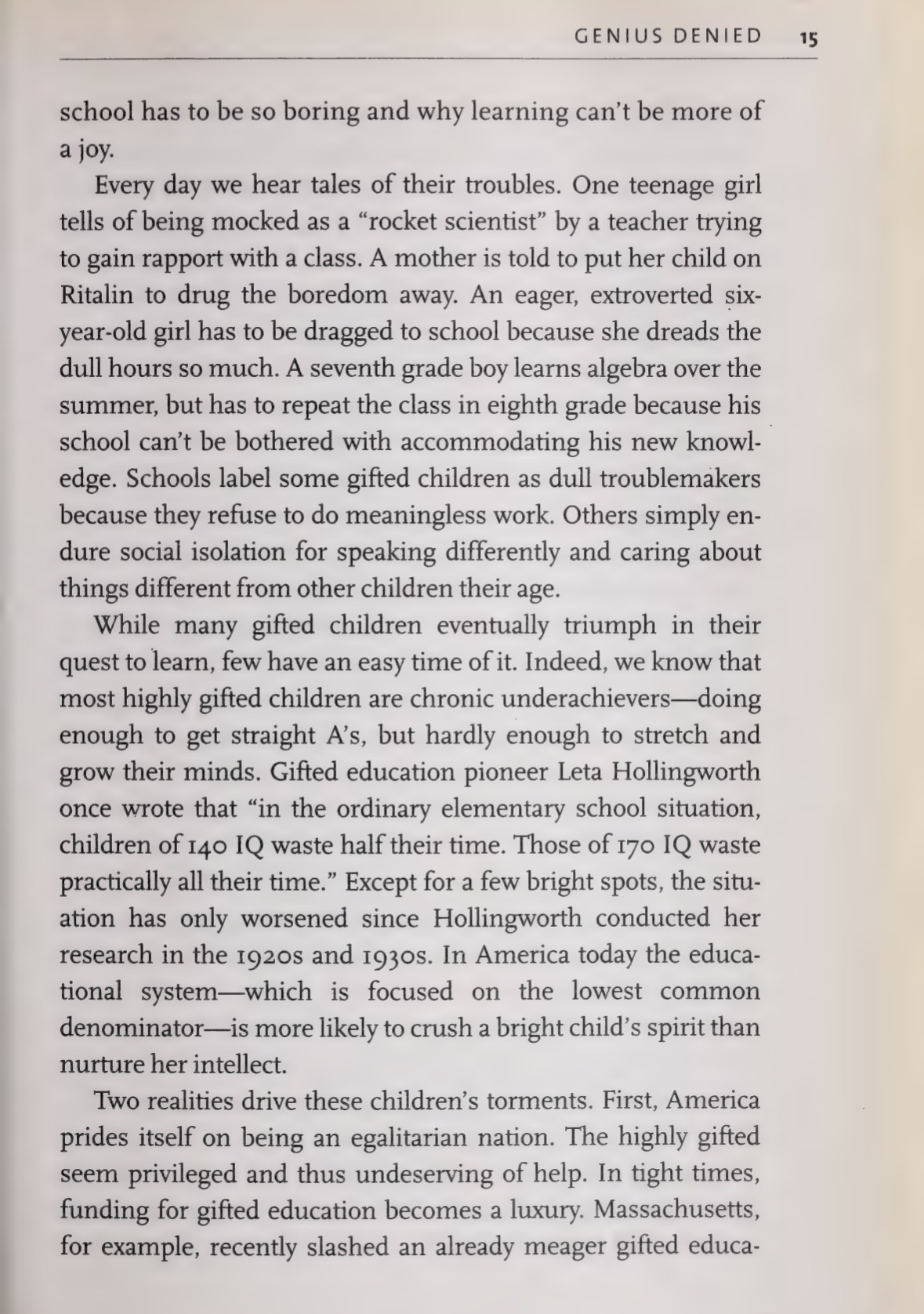
Davidson Institute also runs Davidson Young Scholars summer camps and awards Davidson Fellowship scholarships. Years before the Academy opened, the Davidsons wrote a book called Genius Denied arguing that the profoundly gifted are profoundly underserved, using the scholars they’d seen to illustrate the point. One such case:

When Rachel was four years old, she told her mother she wanted to write a story. The little girl couldn’t physically write the words yet, so she asked her mother to write them down for her. Her mother agreed to do so and then marveled as Rachel dictated an elaborate ten-page tale called “The Time of Great Recise” about a recently orphaned heroine struggling with her grief. Rachel knew no word that meant “strife,” but also the process of overcoming it, so she coined “recise” to mean just that. She was too young and her ideas too big to be limited by the English language. For Rachel, growing up in a small town in Pennsylvania, writing proved to be her own means of “great recise.” She was always different. When she played with other children her age, she wanted to talk about her Chronicles of Narnia books and the science fiction fantasy worlds she dreamed up, while they wanted to talk about toys. Troubled by this, she looked forward to school. She imagined there would be other children like her there, children who vacuumed up information, children who had hundreds of questions, children who loved to solve fascinating problems. So she watched the school bus from the window and looked forward to all she would learn. But school, too, lagged behind her mind. Rachel knew how to read already and read voraciously. By second grade the rest of her class was reading two-paragraph selections from a reader while she raced through the comprehension questions to devour a few more pages in her Madeleine L’Engle books. She used words her classmates didn’t understand, so she was the quirky child. In elementary school that was mostly okay. She came to class dressed as Jo March to tell the other eight-year-olds the plot of Little Women, and she soaked up their rapt attention. She produced a science fiction trilogy of short stories that earned her a place in her school’s gifted program, although all that meant was a few extra hours a week of word puzzles and the like. She read books on everything from politics to physics and formed opinions on world affairs that seemed strange coming from a curly-haired child. And some force kept compelling her to write. She would skip anything else to make the words that jumbled in her head appear on the page. Rachel’s parents knew she was a high-maintenance child— energetic, emotional, and very, very bright. Then they had her tested and discovered that her IQ (intelligence quotient) was so high, a score like hers occurred less than once in a thousand people. A small town like…
Replies (14)

Leon Voss
#23

breakdown is 61.3% Asian, 21.4% White, 12.1% “multiracial” (I assume mostly Asian+White), 2.3% Hispanic, 2.3% Pacific Islander (huh?), and 0.6% Black.

Way too many Asians, there’s no way there’s that many 145+ IQ Asians compared to whites worldwide, much less in the USA. They definitely break the tests by studying too much. Also those SAT scores are more like 135 even among whites, so it’s weird they want 145 WISC.

Still, better than the trashy public school nightmare Rachel Emery attended. Why didn’t her parents just have her drop out? I guess it’s easier with online programs now, which wouldn’t have existed in 2001. Genius Denied looks like an interesting book, I’ll probably read it this month.

Poor girl. I hope she got married and had a lot of kids. I bet finding an intelligent husband who cultivated her intellect like Will and Ariel Durant would have alleviated her depression.

Leon Voss
#77

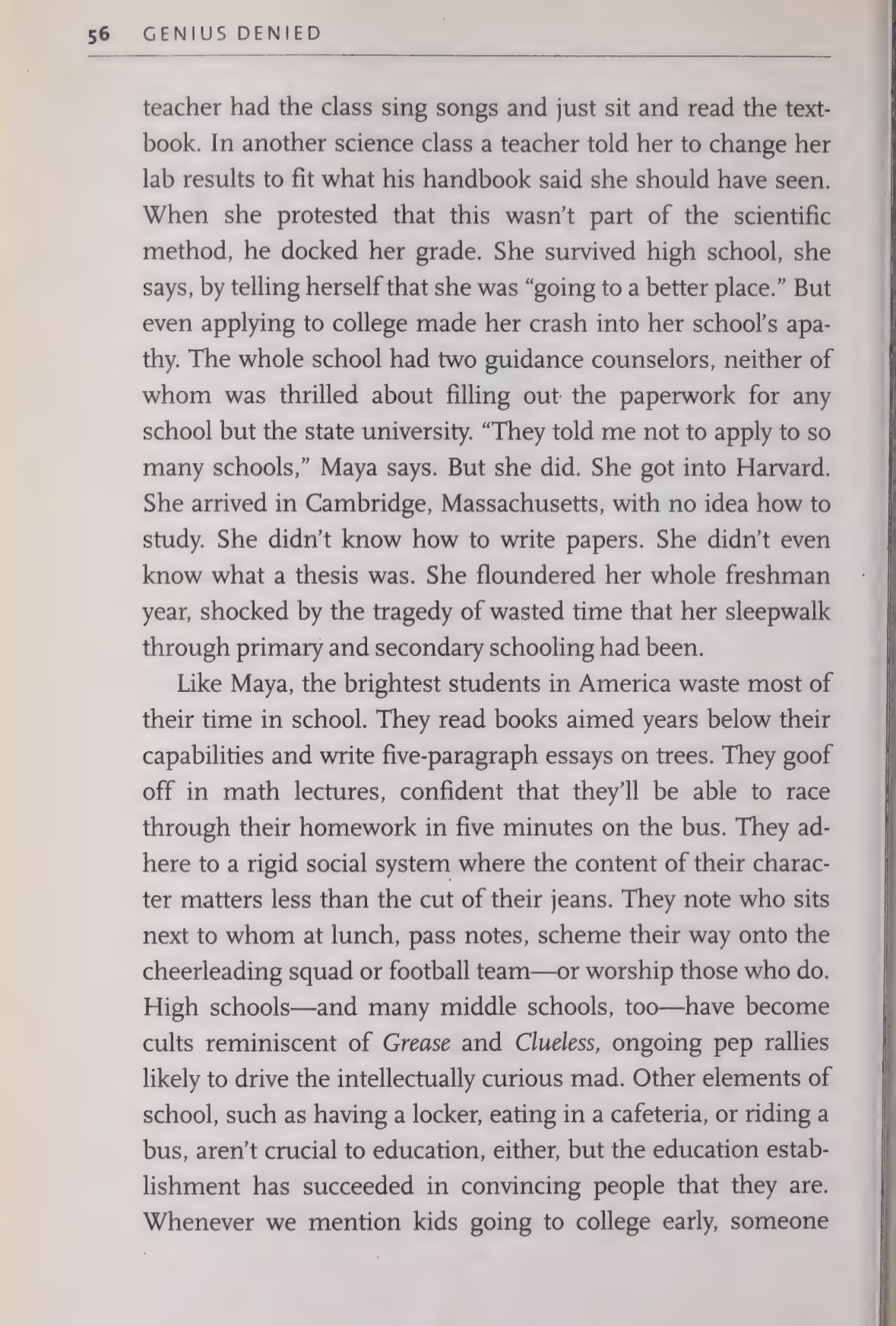
“140 IQ kids waste half their time in school”. If IQ is interval this suggests 30 IQ points cover half of school, so school is made for 110 IQ kids who waste no time, is too hard for people under, 80 IQers need double the time, 125 IQers waste a quarter of their time.

This implies the following college graduation ages.

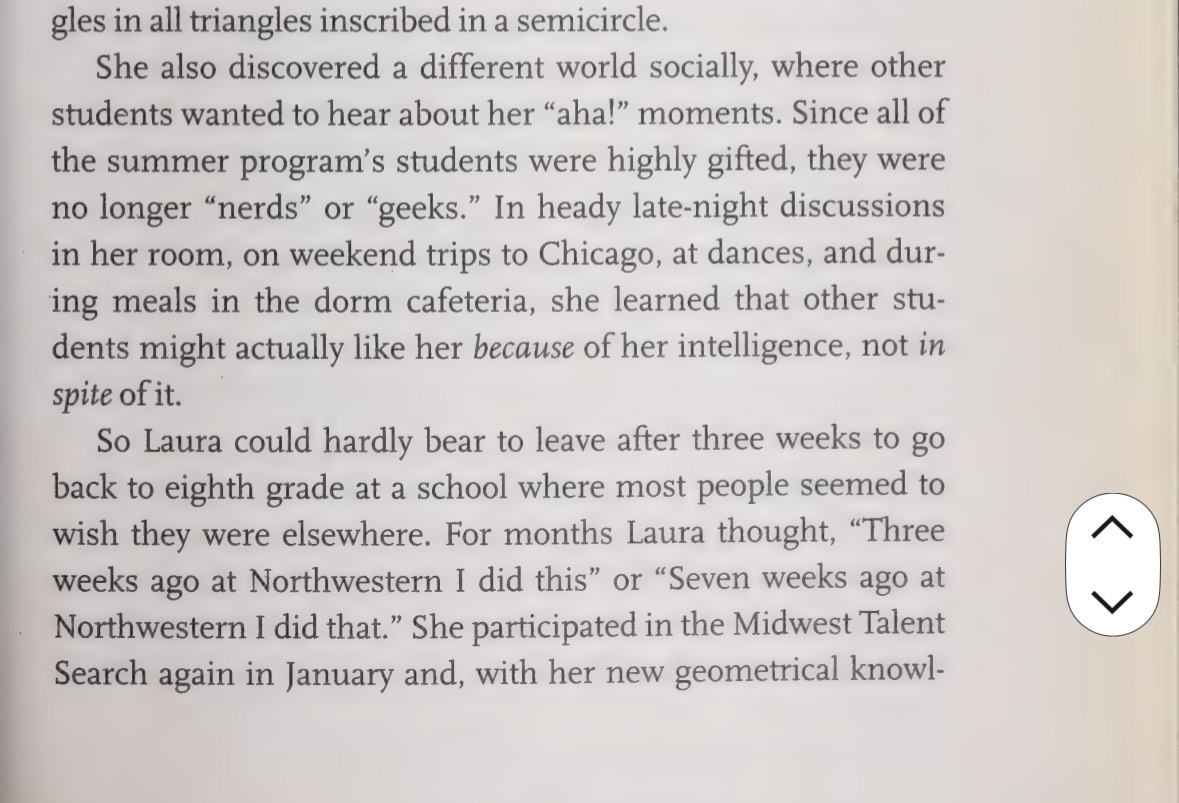
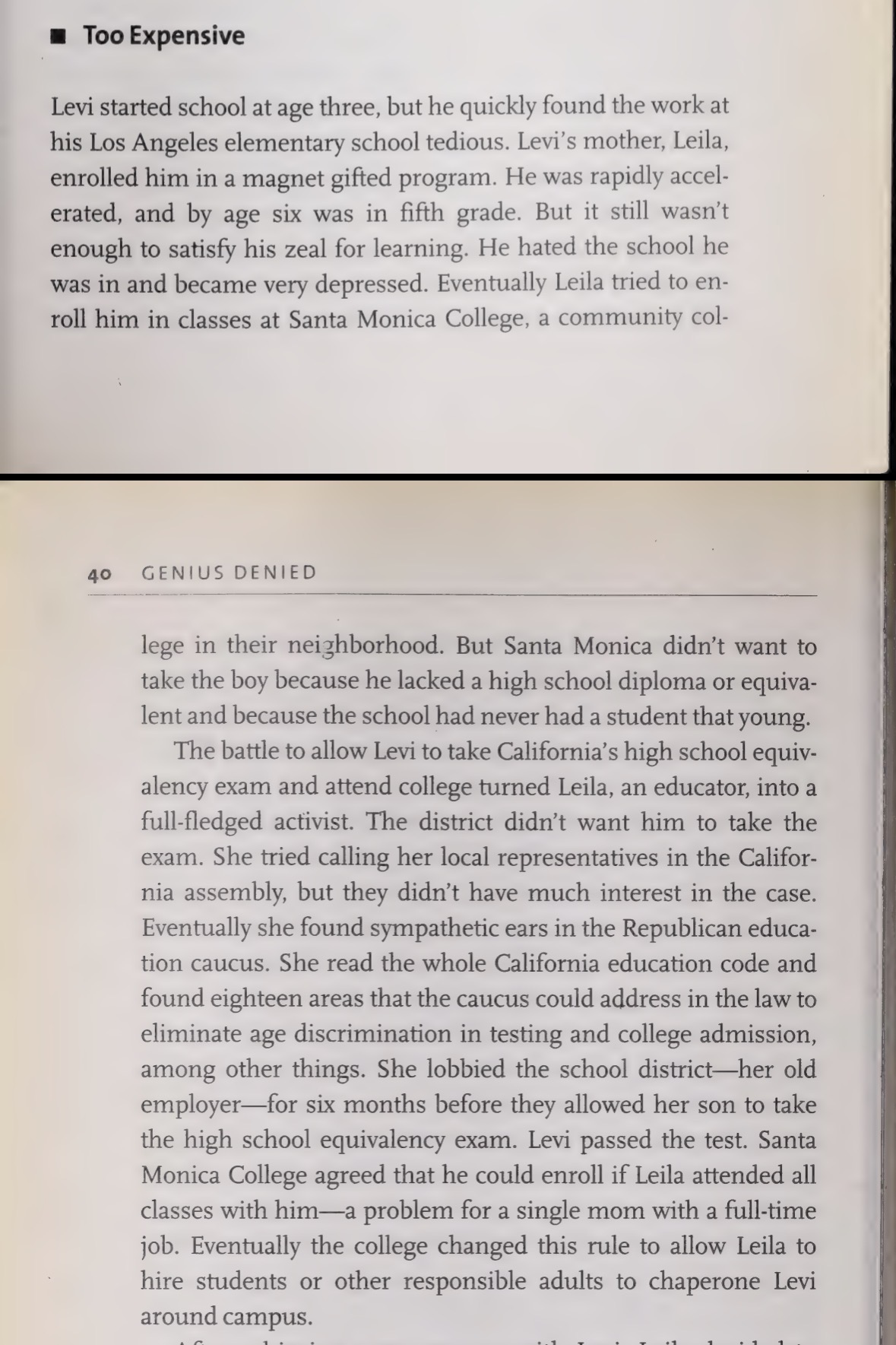
110 IQ: 22 125 IQ: 18 140 IQ: 14 155 IQ: 10 170 IQ: Already like a college graduate at 6 years old? IMG_0155.jpeg

Leon Vossreply to #77
#78

Hard to believe college at 6 or 7 is just IQ considering I have never heard of this guy. Also why does he need a chaperone if he’s adult level intelligence? Would they make a midget have a chaperone? IMG_0163.jpeg

neroli • edited • reply to #78
#80

The Davidson Institute has written much about asynchronous development. A gifted individual still in his childhood is not an adult in a child’s body, and the concept that cognitive maturity is a prix fixe menu of capacities developed in lockstep is part of the reason gifted kids’ educational needs are so downplayed. The claim that a certain level of verbal and mathematical ability is inherently bundled with readiness to navigate independent adult life kind of implies that kids who aren’t yet socially adept, emotionally regulated, and ready to navigate independent adult life can’t handle verbal and mathematical material at or above that level, even when they clearly demonstrate otherwise. Davidson camps are appreciated because they’re environments where profoundly gifted kids still get to be the kids that they are while their abilities aren’t held back, where “I’m capable of greater cognitive feats than most” and “I still want and deserve a proper childhood” are understood not to be contradictory statements.

I believe six year old children need to be safeguarded regardless of how asynchronous their development is.

Leon Vossreply to #80
#81

A lot of this does not directly address the need for a chaperone.

readiness to navigate independent adult life kind of implies that kids who aren’t yet socially adept, emotionally regulated,

I don’t think walking around a campus without getting lost or dying requires one to be socially adept or emotionally regulated? It’s extra funny because normal kids around that age before ~2000 would just roam around outside on bikes unsupervised. I think some kid on a surveilled college campus will be safe from car traffic and child abductors.

Parents have legitimate authority over their children

Not when their children are smarter than them. Unadjusted for age of course, I’m sure a brilliant toddler is dumber than his mother but legitimate parenting can end at 12 or 13 in a lot of cases where a child is like 20 points smarter than his or her parents.

“I still want and deserve a proper childhood”

A “proper childhood” is forced egalitarian schooling, is it not? “socially adept, emotionally regulated” sounds a lot like EQ – are they even measurable? How do you know if smart kids have deficits in these relative to their IQs for sure? 125+ IQ 12 year olds can be treated like normal adults, or even above-average adults, really without any problem in my experience. There seems to be no important age-related deficit that is not IQ. It stands to reason that as kids get younger, you can treat them like normal adults if you increase their IQ enough, to the 145+ range.

nerolireply to #81
#83

A “proper childhood” is forced egalitarian schooling, is it not?

It’s not? One can still be living as a kid rather than an adult and still learn material that’s calibrated to his cognitive level instead of work that’s too easy for him.

Leon Vossreply to #83
#85

can still be living as a kid rather than an adult

What’s that mean? Free housing? A lot of people have that into their 20s. Some even get it from the government for their whole lives.

nerolireply to #85
#86

I’m going to have to disagree with you that high IQ asynchronously developed kids are ready to navigate independent adult life so soon. My IQ is higher than my parents’ but I clearly wasn’t ready to raise myself at 12. Nonetheless, I look forward to you sharing more excerpts.

Leon Vossreply to #86
#88

But how much higher is your IQ? Both my wife and I were above median adult intelligence at 12. She also says she could have made her own decisions pretty easily at that age.

Leon Vossreply to #77
#79

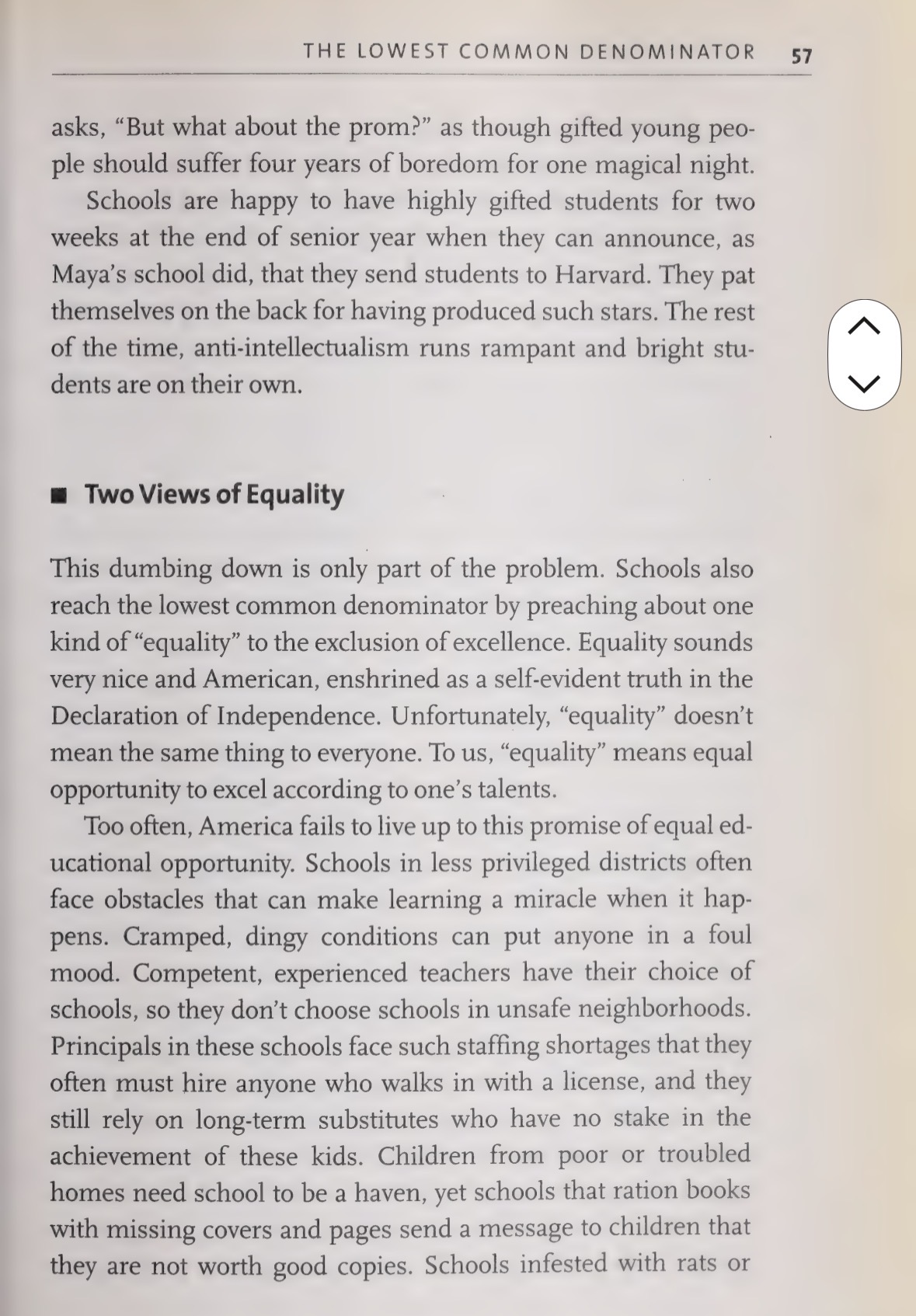
Slurs for intelligence are weird. Shouldn’t normies admire higher intelligence? Normies are such terrible narcissists.

IMG_0164.jpeg

nerolireply to #79
#82

Kids don’t necessarily know a peer’s IQ and what it indicates. There are high IQ youth who are socially adept, outgoing, athletic, attractive, etc, who were never seen as targets for bullying, so clearly it’s not intelligence they’re after. Those who keep to themselves, are into interests and subcultures that others find weird, and are socially out of touch with peers are inevitably going to be targets; they don’t admire all that.

Leon Vossreply to #82
#84

There are high IQ youth who are socially adept, outgoing

So they hide their IQs?

Those who keep to themselves, are into interests and subcultures that others find weird,

So those who don’t hide their IQs?

I think you’re a bit too charitable to average people with your usage of the concept “weird” and “social skills.” They largely mean if average people approve of you or not. The real reason they don’t like someone remains hidden. It can very well be superior intelligence.

Leon Vossreply to #77
#94

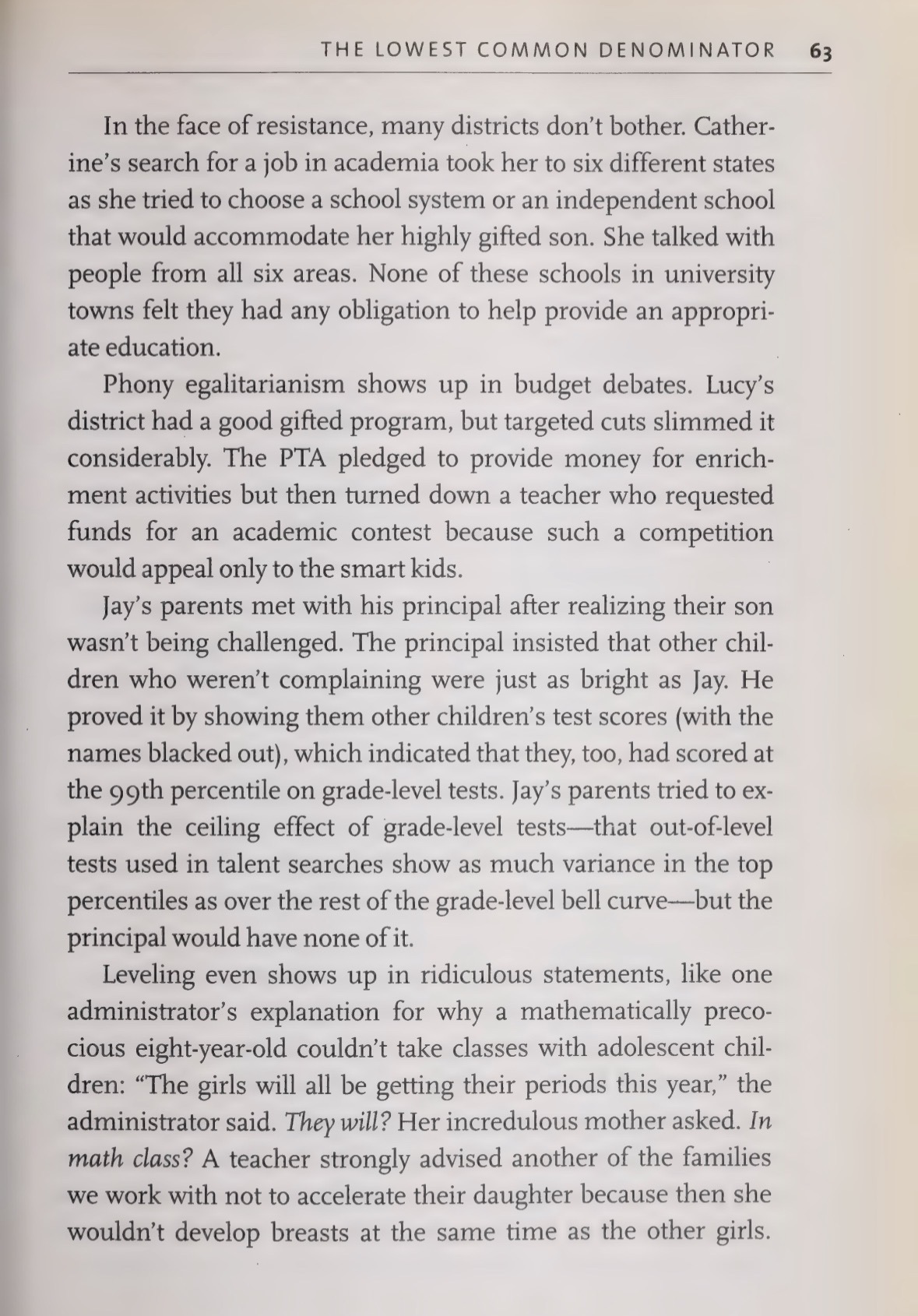
High school should be abolished, huge waste of time. Smart students should just study at the high school level in middle school and then go to university where there are smart lecturers instead of dumb NEA members. IMG_0177.jpeg IMG_0178.jpeg

Leon Vossreply to #77
#95

Schoools are supposed to be for the smart. Sports leagues should be for the low IQ. But it’s like the low IQ “colonize” schools. Crazy.

IMG_0179.jpeg

Post a Reply

Log in to reply.